
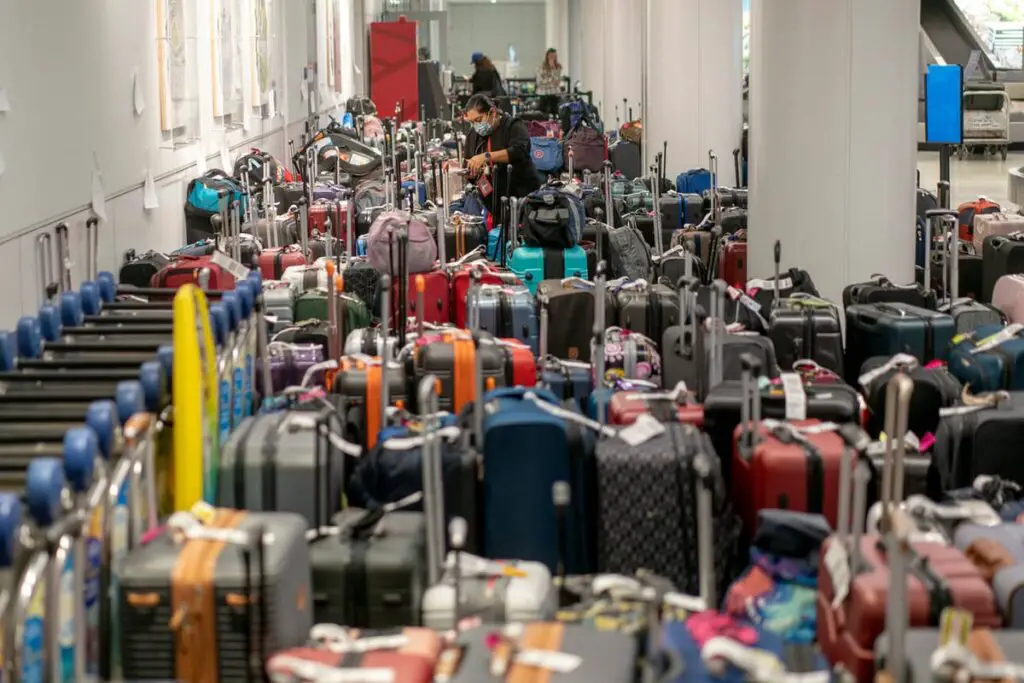
In the world of air travel, there are three certainties: death, taxes, and the ever-rising cost of checking a suitcase. As of late March 2026, the aviation industry has once again turned the dial on baggage fees. Leading the charge, JetBlue recently hiked its first checked bag fee to a staggering $49 for peak travel periods, citing a 26% surge in jet fuel costs driven by global supply disruptions.
While airlines are quick to point to the gas pump as the culprit, history tells a much more cynical story. If you’re waiting for those fees to drop when oil prices eventually stabilize, don’t hold your breath. Here is why baggage fees have become a permanent fixture of the sky—and why they only ever go up.
Airlines have a long-standing tradition of using fuel volatility as the ultimate get out of jail free card for price hikes. In the first quarter of 2026, jet fuel hit a projected range of $3.01 to $3.06 per gallon. Because fuel typically accounts for about 25% of an airline’s operating expenses, any spike creates an immediate emergency in the boardroom. However, there is a fundamental difference between a surcharge and a fee structure. A surcharge is designed to be temporary; a fee is a fundamental change to the product. By raising the baggage fee rather than the base ticket price, airlines can keep their headline fares looking attractively low on search engines while recouping their fuel costs at the check-in counter.
To understand why these fees never go down, we have to look back at 2008. During the Great Recession, when oil hit nearly $150 a barrel, American Airlines became the first legacy carrier to charge for a checked bag as a temporary survival measure. The industry watched closely. When fuel prices eventually cratered, the fees didn’t follow them down. Instead, they became a cash cow that the industry simply couldn’t quit. By 2023, U.S. airlines were raking in over $33 billion in baggage fees alone. In 2026, that figure is projected to climb even higher as ancillary revenue now accounts for over 30% of total income for many carriers.
For years, Southwest Airlines was the lone holdout, using its Bags Fly Free policy as a massive competitive advantage. But even that fortress has crumbled. As of May 2025, Southwest officially aligned with the rest of the industry by charging for checked bags on most fare types. With the last major holdout gone, there is no longer any competitive pressure to keep fees low. When every airline charges for a bag, the market rate simply becomes whatever the most expensive carrier can get away with.
In economics, the ratchet effect describes a situation where prices or wages increase easily but are very resistant to decreasing. Airlines have discovered that passengers, while annoyed, have accepted the baggage fee as a cost of doing business. Once a passenger is conditioned to pay $40, they won’t suddenly fly more because it dropped to $30.2.
Airlines are no longer just transportation companies; they are retailers of travel experiences. Shareholders don’t want to see revenue streams disappear. If an airline were to cut baggage fees, they would have to explain to investors why they are walking away from billions in pure profit.
By 2026, nearly half of all major carriers have adopted dynamic pricing for bags. This means the fee isn’t just a flat rate; it fluctuates based on when you book, the popularity of the route, and even the weather. This algorithmic approach ensures that the airline is always extracting the maximum willingness to pay from every traveler.
Next time you see a headline about fuel prices causing a baggage fee hike, remember that the fuel is just the trigger, not the cause. The cause is a fundamental shift in how airlines make money. We have moved from a bundled world where your ticket got you and your stuff to your destination, to an unbundled world where the seat is just the entry fee. So, buy that smaller carry-on and master the art of traveling light because in the eyes of the airlines, your suitcase is no longer a courtesy; it’s a profit margin.