
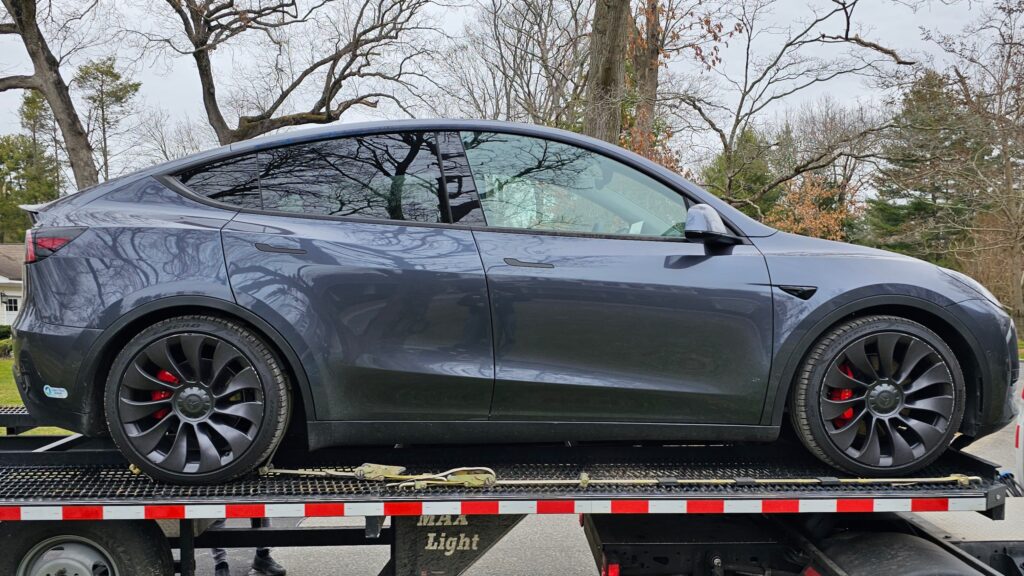
I read that China introduced a new automotive safety regulation that will ban hidden or retractable car door handles on vehicles sold in the country. China is the first place anywhere in the world to ban the retractable car door handles.
Why the Ban? Safety First
The new rule, issued by China’s Ministry of Industry and Information Technology, is designed to improve emergency escape and rescue outcomes during accidents. Regulators concluded that modern flush-mounted or fully concealed door handles, a design popularized by Tesla and widely adopted by electric vehicle (EV) makers, can fail to operate properly if power is lost in a crash or systems malfunction. This new rule will impact not only Tesla but many of China’s EV manufacturers.
Several high-profile cases where occupants were trapped inside burning EVs following collisions, including incidents involving Xiaomi-branded electric sedans, intensified scrutiny of these mechanisms and helped accelerate the policy.
What the New Standards Require
Under the regulation set to take effect on January 1, 2027, all passenger vehicles sold in China must:
- Feature visible, mechanically operable exterior door handles on every door.
- Include interior mechanical releases that are easy to locate and use in emergencies.
- Meet specific dimensional and accessibility criteria for handle design.
The move is explicitly aimed at ensuring that doors can be opened by occupants or first responders without relying on electrical systems, a critical concern when batteries are damaged or power is cut after crashes.
Impact on Automakers and Design Trends
This regulatory shift affects a broad swath of current and upcoming models that use sleek, aerodynamic door designs with emotionally appealing concealment features. Popular EVs — from Tesla’s Model 3 and Model Y to various Chinese electric vehicles — will need redesigns to meet the new standards.
While the requirement could add cost and redesign effort, Chinese automakers and overseas brands supplying vehicles to China will have to adapt their design strategies to comply. Because China is the world’s largest auto market, analysts say the rule could ripple outward and influence global vehicle design standards in other regions.
A Broader Trend in Vehicle Regulation
China’s decision marks a notable moment in automotive safety regulation — one where aesthetic and aerodynamic trends are explicitly balanced against emergency functionality. Regulators in the United States and Europe have also raised questions about hidden door handle safety in recent years, although no comparable bans have been enacted so far.